Haemorrhoids (piles)

Understanding Haemorrhoids

Haemorrhoids (commonly called piles) are swollen blood vessels in the lower rectum and anus. They can occur internally (inside the rectum) or externally; very often they present as a combination of both as interno-external haemorrhoids.

Haemorrhoids usually present as bleeding per rectum, itching around the anus, pain whilst opening bowels and feeling a lump around the anus.

Management of haemorrhoids

Once diagnosed the management of haemorrhoids is personalised to every patient.

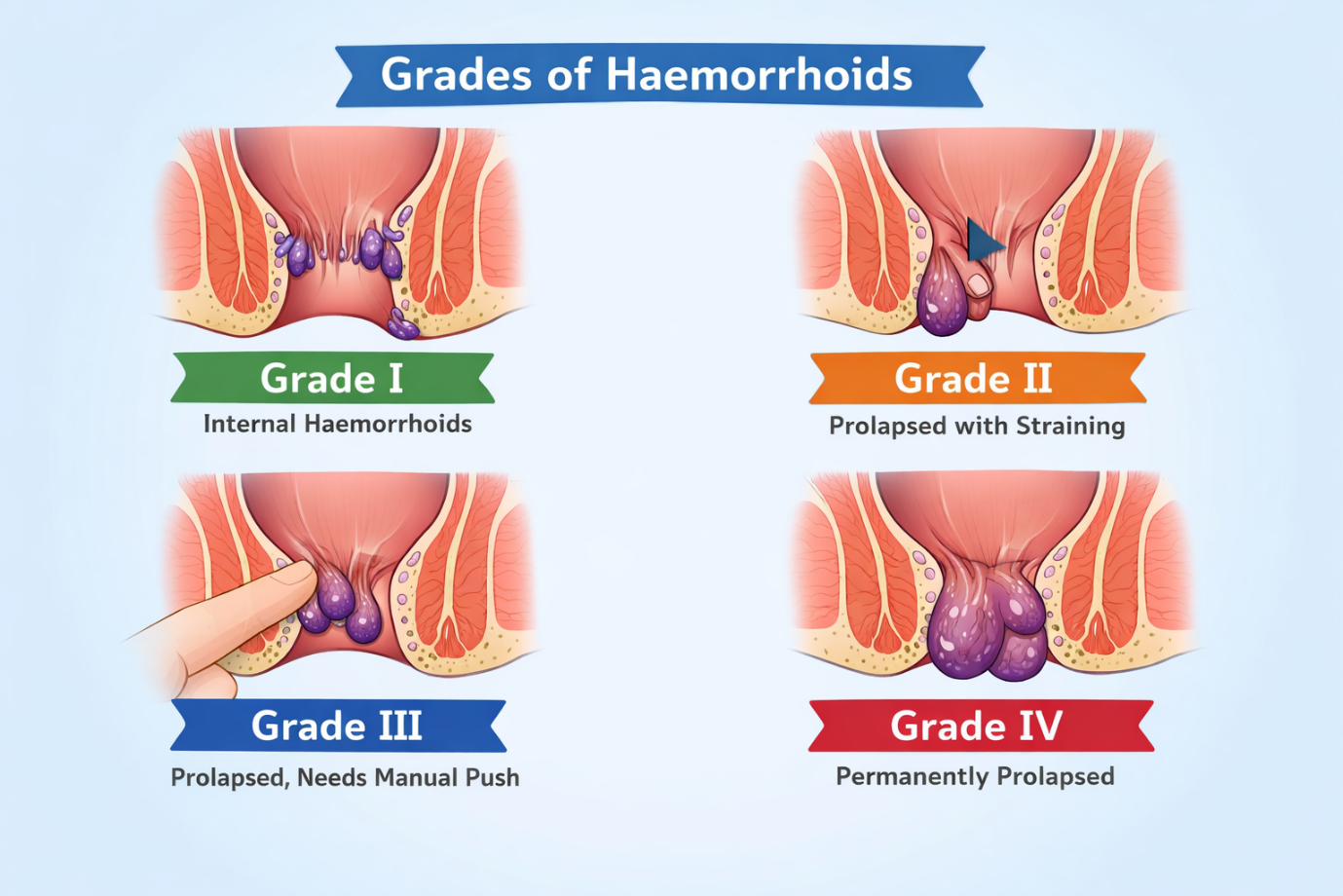
Haemorrhoids are usually managed based on the grade of haemorrhoids.

Grade 1 and 2 haemorrhoids are managed conservatively with lifestyle modification advice +/- rubber band ligation of the haemorrhoid ( relatively pain free procedure).

Grade 3 and 4 haemorrhoids may need further treatment such as haemorrhoidectomy or haemorrhoidal artery ligation techniques.    It is important to understand that the grades of haemorrhoids are not watertight compartments, and the management of haemorrhoids is more nuanced than algorithmic.

FAQs - Haemorrhoids (piles)

Are haemorrhoids normal?

Yes, haemorrhoids are a normal part of the body. Inside everyone’s anal canal, they are small cushions made up of blood vessels, tissue, and muscle, known as haemorrhoidal cushions. These cushions help control bowel movements, maintain continence (prevent leakage), and provide a soft seal to protect the anal canal.

Haemorrhoids become a problem only when these normal cushions bleed, become swollen, inflamed, or slip down (prolapse).

It is important to consult a colorectal surgeon if the haemorrhoids are symptomatic.  Although haemorrhoids are benign disease, the symptoms complex can overlap with more sinister pathology such as bowel cancer and therefore it is important for a specialist to a) rule out more sinister causes and b) make an accurate personalised treatment plan

No. Surgery is usually reserved for patients with Grade III and IV haemorrhoids.  Most patients with mild haemorrhoidal disease have noticeable improvement in symptoms with conservative lifestyle modifying measures.

Improving and maintaining a healthy lifestyle is essential to prevent haemorrhoids from affecting your quality of life.  This usually involves eating a high-fiber diet, staying hydrated, exercising regularly, avoiding prolonged straining to open your bowels.

Mr Joshua Franklyn

Mr Joshua Franklyn

Typically replies within an hour

I will be back soon

Mr Joshua Franklyn
To make an enquiry or booking, feel free to use the chat. I will reply as soon as I can.
WhatsApp